 English
 Russian
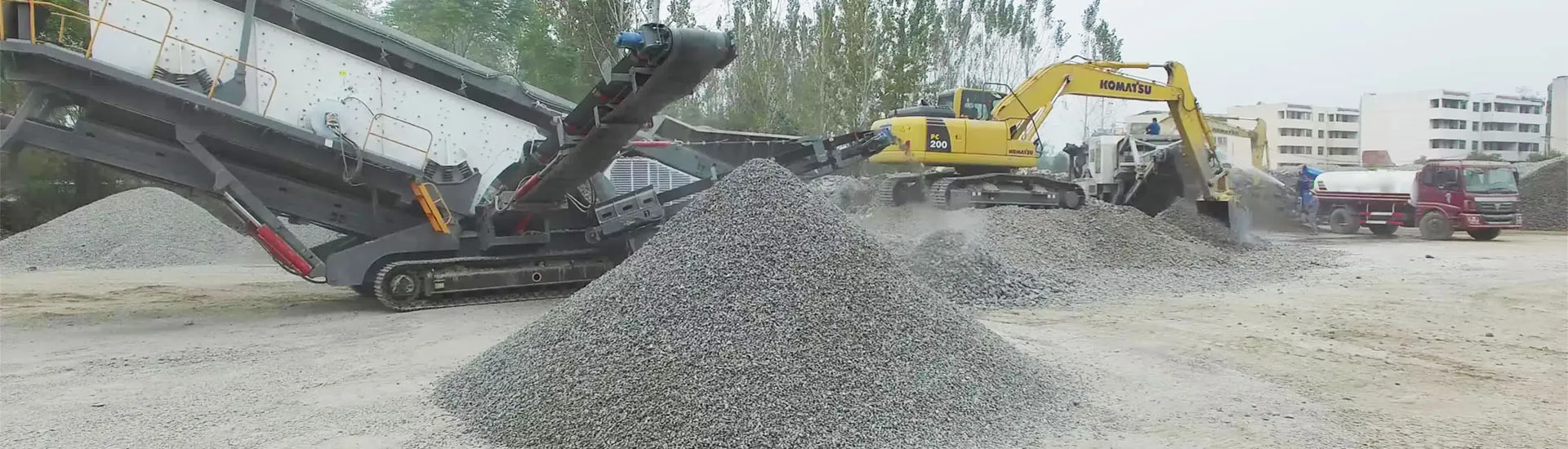
Introduction: The Swing Plate – The 'Power Core and Safety Guardian' of the Jaw Crusher
As a core crushing equipment in mining, infrastructure, and construction waste recycling, the jaw crusher holds a significant position due to its simple structure, reliable operation, and high crushing strength. Among its many components, the swing plate (also known as the movable jaw plate) may seem ordinary, but it directly determines crushing efficiency, product quality, and equipment safety. Whether processing hard granite or iron ore, or medium-hard limestone and concrete blocks, the stable operation of the swing plate is key to ensuring normal working conditions of the equipment. This article will comprehensively break down the core role of the swing plate based on the latest industry technical information and address frequently asked questions from users.
The core role of the swing plate: full-process support from power transmission to safety protection
1.The key medium for power transmission, driving the crushing cycle
The swing plate is the core executing component of the jaw crusher's transmission system. When the equipment is operating, the motor drives the eccentric shaft to rotate through a pulley. The rotation of the eccentric shaft drives the connecting rod to move up and down in a reciprocating motion, which in turn pushes the swing plate via the thrust plate to achieve periodic swinging. In this power transmission path, the swing plate converts rotational motion into linear reciprocating motion, providing the core power for material crushing. Although the details of power transmission differ among various models, the swing plate's role in bearing power always remains the same— in a single-toggle jaw crusher, the swing plate is hung on the main shaft and swings left and right through the linkage of double thrust plates; in a double-toggle jaw crusher, the upper end of the swing plate is directly hung on the eccentric shaft, while the lower end is supported by the thrust plate, forming a more complex planar motion trajectory.
2. Build a crushing chamber to achieve multi-dimensional material crushing
The swing plate and the fixed jaw plate work together to form a "wide at the top, narrow at the bottom" wedge-shaped crushing chamber, which is the core area for material crushing. When the swing plate moves toward the fixed jaw, the material in the chamber is crushed through compression, bending, and splitting; when the swing plate moves away from the fixed jaw, the crushed material falls under gravity, creating space for new material to enter and completing one crushing cycle. It is worth noting that the swing trajectory of the swing plate directly affects the crushing effect: in a compound pendulum crusher, the upper movement trajectory of the swing plate is approximately circular, while the lower part is elliptical, with the horizontal stroke of the upper part being about 1.5 times that of the lower part. This better adapts to the initial crushing needs of large materials, making the filling of the crushing chamber more uniform, the product size more regular (higher proportion of cubic material, fewer flaky components), and the productivity increased by 20-30% compared with single-toggle crushers of the same specification.
3. Adjust the discharge particle size to meet diverse production needs
The installation position of the swing plate and its swing stroke directly determine the size of the discharge opening, which in turn affects the particle size of the final product. By adjusting the connection position between the thrust plate and the frame, the minimum distance between the swing plate and the fixed jaw (i.e., the width of the discharge opening) can be changed, enabling multi-level adjustments from coarse crushing (discharge opening 150-300mm) to fine crushing (discharge opening 10-50mm). For example, in the scenario of recycling construction waste, by adjusting the swing plate stroke and the size of the discharge opening, concrete blocks can be crushed to 10-30mm, meeting the C30 concrete aggregate standard; whereas in the coarse crushing process in mining, increasing the discharge opening can crush raw ore to below 300mm for subsequent grinding.
4. Overload protection 'buffer pad' extends equipment lifespan
The swing plate is flexibly connected to the frame through the thrust plate, forming a natural overload protection mechanism. When uncrushable foreign objects (such as iron blocks or rebar) enter the crushing chamber, the crushing reaction force increases sharply. When it exceeds the safety threshold, the thrust plate will break, causing the swing plate to stop swinging, thereby preventing damage to core components like the eccentric shaft and frame due to overload. This 'sacrificial' protection design can effectively reduce equipment failure rates and lower maintenance costs. In addition, the choice of material for the swing plate (such as high manganese steel Mn13 for medium-hard materials or alloy steel Cr26 for hard rock) also affects its impact resistance and wear resistance, indirectly ensuring the long-term stable operation of the equipment.
Simple Pendulum and Compound Pendulum Jaw Crushers: Core Differences in the Function of the Swing Plate
According to different swinging methods, jaw crushers are divided into single-toggle and double-toggle types. The motion characteristics and functional emphasis of the swing plate differ significantly, with a detailed comparison as follows:
| Comparison Dimension | Simple Swing Jaw Crusher | Complex Swing Jaw Crusher |
| Swing Trajectory | A circular arc trajectory around the suspension shaft, with smaller swings at the top and larger swings at the bottom | The upper part is approximately circular, while the lower part is elliptical, with the ellipticity increasing toward the bottom. |
| Core Function Focus | Suitable for coarse crushing of hard rock, with smooth swinging, low wear on the jaw plates, and minimal over-crushing. | High crushing efficiency, good product quality, with a forced discharge function, suitable for medium and fine crushing as well as damp and sticky materials. |
| Power Transmission Efficiency |
Power Transmission Efficiency Crank double-link mechanism, with small stress on the eccentric shaft, can be made into large machines |
Directly driven by the eccentric shaft, with a compact structure, mainly for small and medium-sized machines |
Key Points for Using and Maintaining the Swing Plate: Enhancing Equipment Operational Stability
The swing plate, as a wear-prone component, has maintenance quality that directly affects equipment capacity and service life. Based on industry practical experience, attention should be paid to the following points:
Regularly check the connection between the swing plate and the thrust plate, ensure the bolts are tightened, and prevent loosening or impact issues. It is recommended to maintain a gap of 5-8mm between the upper and lower jaw plates;
Select a swing plate made of material suitable for the hardness of the crushed material: medium-hard materials (coal gangue, limestone) should use high manganese steel Mn13, and hard rocks (granite, basalt) should use Cr26 alloy steel, which can extend service life by more than three times;
Monitor the swing frequency and stroke. For soft rock crushing, a frequency of 180-220 rpm is recommended, and for hard rock, 220-260 rpm, to avoid excessive frequency that leads to a sharp increase in energy consumption;
When the wear of the swing plate exceeds 5mm or cracks appear, it should be replaced promptly to prevent insufficient crushing force from affecting production capacity and to avoid damaging other transmission components.
Conclusion: Pay attention to the role of the swing plate and optimize the efficiency of the crushing system
As the "power executor" and "safety guardian" of a jaw crusher, the swing plate plays a role throughout the entire material crushing process, directly affecting crushing efficiency, product quality, and equipment safety. Whether in mining operations, infrastructure construction, or construction waste recycling, understanding the working principle, functional differences, and maintenance essentials of the swing plate can help companies select the right model, optimize operating parameters, and reduce production costs. If there are questions regarding swing plate selection or troubleshooting, it is advisable to consider the equipment model and material characteristics, refer to professional technical manuals, or consult the equipment manufacturer for customized solutions.