 English
 Russian
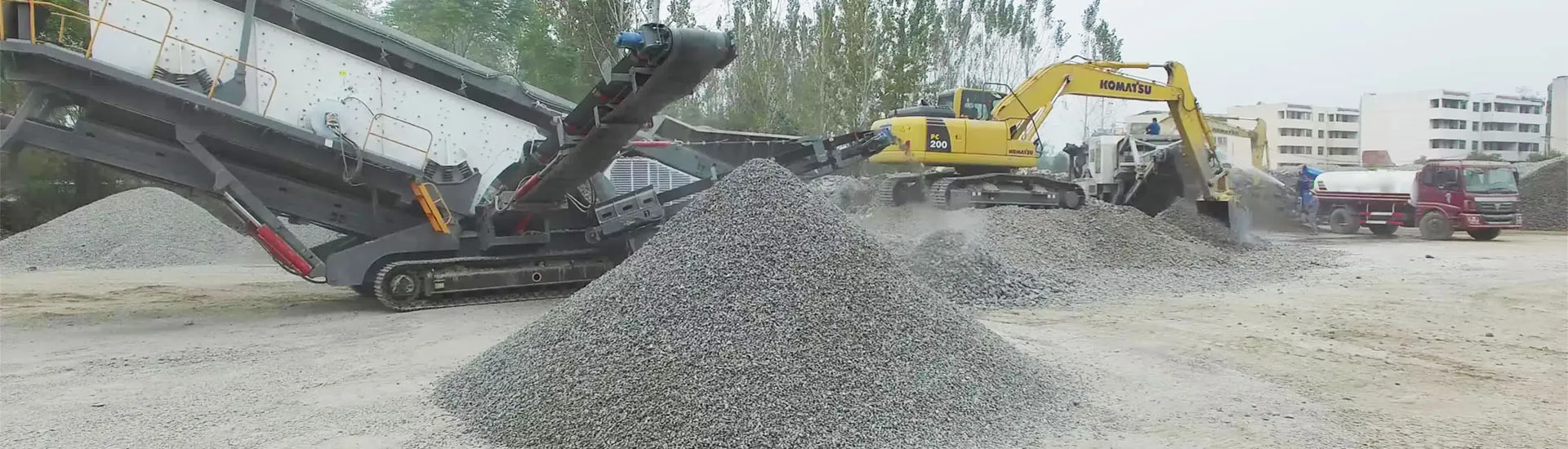
In the 'lifeline' transmission system of industrial production, there is a type of equipment that always plays a key role like a 'backbone'—it can continuously transport materials day and night, cover long and short distances, and adapt to complex environments. From mining raw coal to container handling at ports, from production line flow in manufacturing to goods sorting in warehousing and logistics, its presence is indispensable. This equipment is the belt conveyor.
Today, let's take an in-depth look at this 'main force of industrial conveying,' to see why it has become the 'favorite' across various industries, and how businesses can choose and use it effectively.
Getting to Know Belt Conveyors: More Than Just a 'Simple Conveyor Belt'
Many people’s impression of belt conveyors is limited to “simple conveyor belts,” but in fact, modern belt conveyors are complex systems integrating mechanical, electrical, and control systems. Their core structure mainly includes the conveyor belt, drive pulley, idler pulley, rollers, tensioning device, braking device, and control system.
The working principle is not complicated: through the friction between the drive pulley and the conveyor belt, the belt is driven to circulate, enabling continuous material transportation. This seemingly simple design can achieve conveying capacities from a few kilograms to several hundred tons per hour, with conveying distances ranging from a few meters to several kilometers, making it both “flexible and powerful.”
Compared with other conveying equipment (such as screw conveyors and scraper conveyors), the core advantages of belt conveyors are particularly prominent, which is also the key reason for their widespread use.
The Core Advantages of Belt Conveyors: Why They Become the Industry's First Choice?
1.Efficient and continuous, maximizing delivery capacity
The biggest advantage of a belt conveyor is its 'continuous operation.' As long as the equipment is functioning properly, it can transport materials continuously and steadily, without the pauses that occur with intermittent conveying equipment. For scenarios such as mines and ports that require large-scale, high-intensity transfer, this advantage directly determines production efficiency. For example, in the transportation of raw coal from a large mine, a single belt conveyor can have an hourly conveying capacity of several thou
sand tons, far exceeding the transfer capabilities of manual labor or other equipment.
2. Highly adaptable, easily handles complex environments
Whether in harsh environments with high or low temperatures, humidity, or dust, or along complex conveyor routes that are horizontal, inclined, or vertical, belt conveyors can easily adapt. For different materials (such as lump ore, powdered coal, bulk grain, or finished goods), different types of conveyor belts (such as rubber belts, nylon belts, or steel cord belts) can be chosen to ensure that materials are transported without spillage or wear. For example, at a container terminal in a port, belt conveyors can work with cranes for fast loading and unloading of goods; in low-temperature cold storage, specialized cold-resistant belts ensure smooth logistics flow.
3. Cost-effective and easier to manage for long-term operation
From a long-term operational perspective, belt conveyors offer excellent cost-effectiveness. On one hand, they have low energy consumption, and the energy required to transport a unit of material is much lower than that of truck transport or forklift handling. On the other hand, their structure is relatively simple, maintenance costs are low, and they have a long service life (high-quality conveyor belts can last for several years). In addition, belt conveyors are highly automated and can operate unattended, significantly reducing labor costs, making them especially suitable for large-scale, long-distance transport scenarios.
4. Operates smoothly with minimal material damage
Compared with scraper conveyors, bucket elevators, and other equipment, belt conveyors have a smoother conveying process. The friction of materials on the conveyor belt is low, and there is no severe collision or crushing. This is especially important in scenarios where maintaining the integrity of materials is required, such as grains, finished parts, or fragile items. For example, in a food processing plant, belt conveyors can transport packaged food smoothly, preventing damage or leakage.
Typical applications of belt conveyors: The 'conveying expert' permeating various industries
With the above advantages, belt conveyors are used in almost all industrial sectors and logistics processes, becoming an indispensable core piece of equipment. Here are a few typical scenarios:
1. Mining and Processing
In the mining sector, belt conveyors are the 'core transportation equipment.' From the underground extraction of raw coal and ore to the material sorting and transfer at surface processing plants, belt conveyors are needed to connect the entire production process. For example, large open-pit coal mines use long-distance, high-capacity belt conveyors to transport raw coal directly to coal washing plants or loading points, replacing traditional truck transportation. This not only improves efficiency but also reduces dust pollution and road wear.
2. Port and Terminal Logistics
Ports are the 'hub' for material transshipment. Belt conveyors are mainly used here for loading and unloading bulk goods (such as coal, iron ore, and grain) from ships and for transshipment. For example, at a grain terminal, belt conveyors can work with ship unloaders to quickly transport grain from the ship's hold to storage silos, and then through another set of belt conveyors to transfer the grain onto trains or trucks, achieving seamless 'ship-to-silo-to-vehicle' operations and significantly improving loading and unloading efficiency.
3. Manufacturing production line
In manufacturing, belt conveyors are the "lifeline" of the production line, responsible for the movement of raw materials, semi-finished products, and finished goods. For example, in an automobile factory, belt conveyors transport parts from the warehouse to various production stations and then convey assembled cars to the inspection area and finished goods warehouse; in an electronics factory, small belt conveyors (such as belt lines and assembly lines) handle the precise transportation of circuit boards and components, ensuring a smooth and efficient production process.
4. Warehousing and Logistics Distribution
In large warehousing centers and logistics parks, belt conveyors are a core component of automated sorting systems. For example, in courier sorting centers, belt conveyors transport packages to different sorting outlets, working with scanning devices and robotic arms to achieve automated sorting, greatly improving sorting efficiency and reducing human errors. Additionally, in special storage environments such as cold storage or hazardous chemical warehouses, specialized belt conveyors can also ensure the safe transfer of materials.
Practical Guide: How to Choose and Use a Belt Conveyor Effectively?
Although belt conveyors have prominent advantages, if the selection is improper or maintenance is inadequate, problems such as belt deviation, tearing, and drum failures can easily occur, affecting production efficiency. Here are some practical suggestions for selection and maintenance:
1. Selection Tips: Accurately Match According to Requirements
① Clarify material characteristics: Choose the appropriate conveyor belt material and model based on the type of material (block, powder, bulk), humidity, temperature, corrosiveness, etc. For example, for conveying high-temperature materials (such as sintered ore), select a heat-resistant conveyor belt; for conveying corrosive materials (such as acid or alkali solutions), choose a corrosion-resistant rubber or plastic conveyor belt.
② Determine conveying parameters: Choose suitable equipment specifications based on the conveying capacity, distance, and angle. For example, for long-distance, high-capacity conveying scenarios, select a high-strength steel cord conveyor belt and a high-power drive drum; when conveying at an incline, pay attention to choosing a non-slip conveyor belt and controlling the incline angle (generally not more than 18°) to prevent material from slipping.
③ Consider environmental requirements: In harsh environments (such as high temperature, low temperature, dusty, or explosive), select equipment with corresponding protective features. For example, in explosive areas of a mine, choose explosion-proof motors and control systems.
2.Maintenance Key Points: Extend Lifespan, Reduce Failures
① Daily Inspection: Regularly check the conveyor belt for tension, misalignment, tears, etc.; check whether the rollers and idlers rotate smoothly and if there are any unusual noises; inspect whether the tensioning and braking devices are working properly.
② Regular Lubrication: Periodically apply lubricating oil to rotating parts such as drive rollers and bearings to reduce friction and wear and extend service life.
③ Cleaning and Maintenance: Promptly remove material residue from the conveyor belt and dust from rollers and idlers to prevent equipment failures caused by material buildup.
④ Emergency Handling: For common faults (such as conveyor belt misalignment), an emergency handling plan should be prepared in advance. For example, adjusting the position of the idlers to correct belt misalignment can prevent tears caused by misalignment.
Summary and Outlook: The Future Development of Belt Conveyors
As the 'backbone of industrial logistics,' belt conveyors have become indispensable core equipment across various industries due to their efficiency, stability, and cost-effectiveness. With the advancement of Industry 4.0 and the development of intelligent technologies, belt conveyors are continuously 'evolving'—innovative applications such as intelligent monitoring systems (which use sensors to track equipment status in real time), unmanned operation, and energy-efficient designs (like variable frequency drive technology) are making belt conveyors more efficient, safe, and environmentally friendly.
For businesses, choosing the right belt conveyor and using it effectively can not only improve transfer efficiency and reduce operating costs but also lay the foundation for intelligent upgrades. If you are struggling with your material handling needs, consider belt conveyors—this 'time-tested' conveyor equipment might provide you with unexpectedly high efficiency.
Finally, if you have specific questions about selecting or maintaining belt conveyors, feel free to leave a comment to discuss. Let's learn and share together!