 English
 Russian
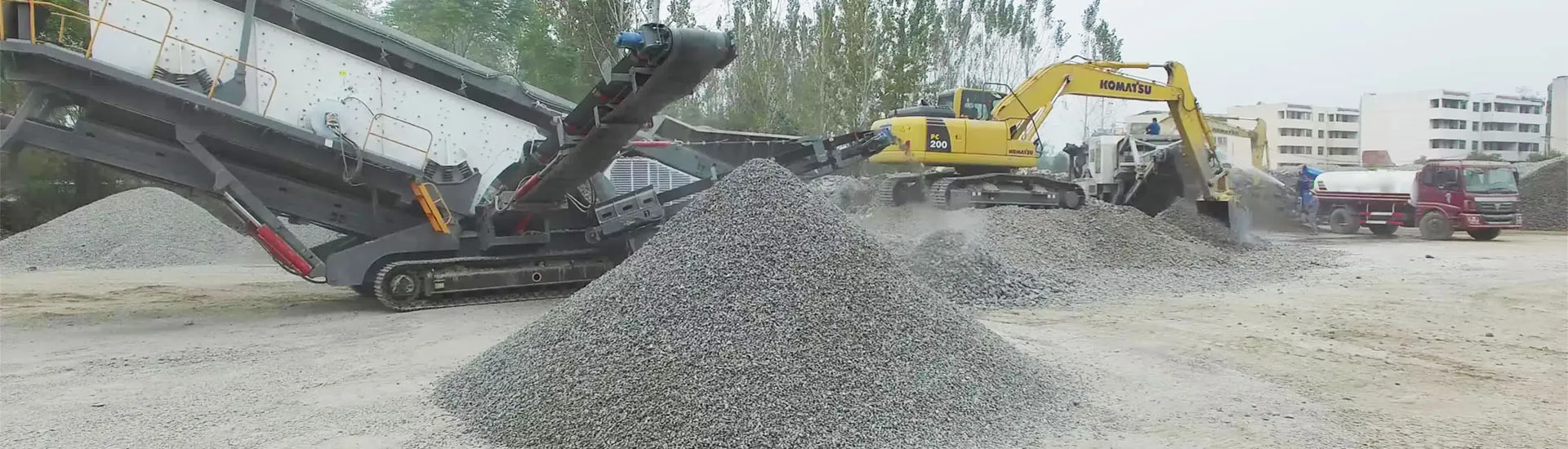
In industrial fields such as mining, sand and gravel processing, and building materials production, screening equipment is a key component for ensuring material grading accuracy and improving production efficiency. The YK series circular vibrating screen and the YA series circular vibrating screen, with their stable performance and wide adaptability, have become the preferred equipment for many enterprises. Today, we will thoroughly break down these two star devices to help you understand their differences, advantages, and selection tips, making your screening operations more efficient and worry-free.
An Introduction to YK/YA Vibrating Screens: Same Origin, Different Functions, Precisely Adapted to Different Needs
Both the YK and YA series vibrating screens fall under the category of circular vibrating screens. Their core working principle is to generate high-frequency circular vibrations through an exciter, causing the material to move in a parabolic motion on the screen surface, thereby achieving the classification of materials of different particle sizes. However, the two differ in structural design and performance focus, precisely matching different production scenarios.
1. YA Series Round Vibrating Screen: A versatile mainstay, stability and reliability are key
The YA series vibrating screen is a highly versatile screening device, featuring 'stability, durability, and broad adaptability.' Its screen box employs a beam-plate structure, providing high stiffness and strong impact resistance, making it suitable for harsh conditions with high material hardness and many impurities in industries such as mining and coal. In terms of the vibration system design, the YA series uses a box-type exciter, which allows easy adjustment of the vibration force and flexible modification of vibration intensity according to material characteristics, ensuring screening efficiency.
Application scenarios: coarse and medium screening operations in industries such as coal, mining, metallurgy, and construction materials, for example, raw coal grading, ore pre-selection, and sand and gravel aggregate pre-processing. It is especially suitable for scenarios requiring high equipment stability and handling complex material conditions.
2. YK Series Circular Vibrating Screen: High-Efficiency Fine Type, Suitable for High-Demand Screening
The YK series vibrating screen is an upgraded and optimized high-efficiency screening equipment based on the YA series, with a greater focus on 'fine screening and high productivity.' It uses an eccentric block vibrator, providing greater excitation force and higher vibration frequency, allowing materials to quickly stratify on the screen surface, significantly improving screening accuracy and processing capacity. Additionally, the screen angle of the YK series can be flexibly adjusted, and with different types of screens (such as perforated screens, woven screens, and polyurethane screens), it can meet the screening needs of various fine materials.
Applicable scenarios: fine processing of sand and gravel aggregates, concrete mixing plants, classification of chemical raw materials, grain processing, and other scenarios that require high screening precision, such as grading of manufactured sand products, cement clinker screening, and sorting of compound fertilizer granules.
Core Advantages of YK/YA Vibrating Screen: Why It Becomes the Industry's Preferred Choice?
Whether it is the YK series or the YA series, their significant market presence is built on the following four core advantages, which are also the key reasons why companies choose them:
Stable and Durable, Long Service Life: Both models feature screening boxes made of high-quality steel, with critical components (vibrators, bearings, screens) subjected to rigorous wear-resistant treatments, allowing them to withstand high-intensity, long-duration operational loads. The well-designed shock-absorbing system not only reduces noise during operation but also minimizes impact on the foundation, extending the overall lifespan of the equipment.
High Screening Efficiency, Reliable Capacity: By optimizing the vibration system and screen design, the material’s movement on the screen surface is more efficient, preventing material accumulation and screen clogging. Under the same conditions, the screening efficiency of the YK/YA vibrating screens is 10%-20% higher than that of ordinary vibrating screens, with more stable capacity, effectively improving the overall efficiency of the production line.
Easy Operation, Low Maintenance Costs: The equipment has a simple structure, making it easy to adjust vibration force and replace screens without the need for specialized technicians. Additionally, core components have a low failure rate and long maintenance cycles, significantly reducing maintenance costs and downtime losses.
Wide Adaptability, Flexible Customization: Different screen specifications, screen types, and vibration parameters can be customized according to various material characteristics (particle size, moisture, hardness) and production requirements. Whether for coarse, medium, or fine screening, or for large ore in mining or fine raw materials in chemicals, suitable adaptation solutions can always be found.
YK/YA Vibrating Screen Selection Guide: Avoid Pitfalls, Match Accurately
Many companies tend to fall into the pitfall of 'only looking at capacity and not considering working conditions' when selecting equipment, leading to improper selection and affecting production efficiency. In fact, as long as you grasp the following four key points, you can accurately choose the YK/YA vibrating screen that suits your needs:
1. Clarify material characteristics
First, it is important to understand the key parameters of the material to be screened: ① Particle size distribution (to determine the mesh size of the screen); ② Material moisture content (high moisture requires an anti-clogging screen, and a dehydration function may be added if necessary); ③ Material hardness (for high hardness, the YA series is preferred due to its stronger impact resistance); ④ Material viscosity (for high viscosity, the vibration force needs to be increased, and the YK series can be selected).
2. Confirm production requirements
Determine the model specifications of the equipment (screen width and length directly affect production capacity) based on the production line's capacity requirements; at the same time, clarify the screening accuracy requirements. If fine screening is needed, prioritize the YK series; if only coarse grading is required, the YA series is more cost-effective.
3. Consider operating conditions
If the working environment is harsh (such as open-pit mines, high dust, or high humidity), equipment with better sealing properties and corrosion- and wear-resistant configurations should be selected; if space is limited, a compact model can be chosen, or the screen angle can be adjusted to save installation space.
4. Matching equipment
Ensure that the vibrating screen matches the capacity, feed opening size, and discharge direction of the upstream and downstream equipment (such as crushers and conveyors) to avoid capacity bottlenecks or material accumulation problems.
Practical Application Case: The Real-World Value of YK/YA Vibrating Screens
Case 1: A large sand and gravel aggregate plant primarily produces manufactured sand and concrete aggregates, requiring fine classification of crushed materials. They selected 3 YK3072 circular vibrating screens equipped with polyurethane screen sheets, achieving a screening accuracy of over 95% and increasing production capacity by 30%, effectively solving the issues of incomplete screening and insufficient capacity associated with traditional equipment.
Case 2: A mining company primarily engaged in iron ore extraction, dealing with highly hard materials with many impurities in harsh operating conditions. They selected 4 YA2460 circular vibrating screens for coarse screening operations. The equipment operated continuously for 12 months without major failures, showed strong impact resistance, and reduced maintenance costs by 25% compared to the previously used equipment, significantly improving production stability.
Conclusion: Choosing the Right YK/YA Vibrating Screen Makes Production More Efficient
Although the YK series and YA series vibrating screens both belong to circular vibrating screens, each has its own focus and is suited to different working conditions and requirements. When choosing between them, there is no need to blindly pursue 'high performance'; instead, you should consider your material characteristics, production requirements, and working conditions to accurately match the equipment and maximize its value.
If you have any questions regarding the selection, use, or maintenance of YK/YA vibrating screens, feel free to leave a comment, and we will provide you with professional solutions!