 English
 Russian
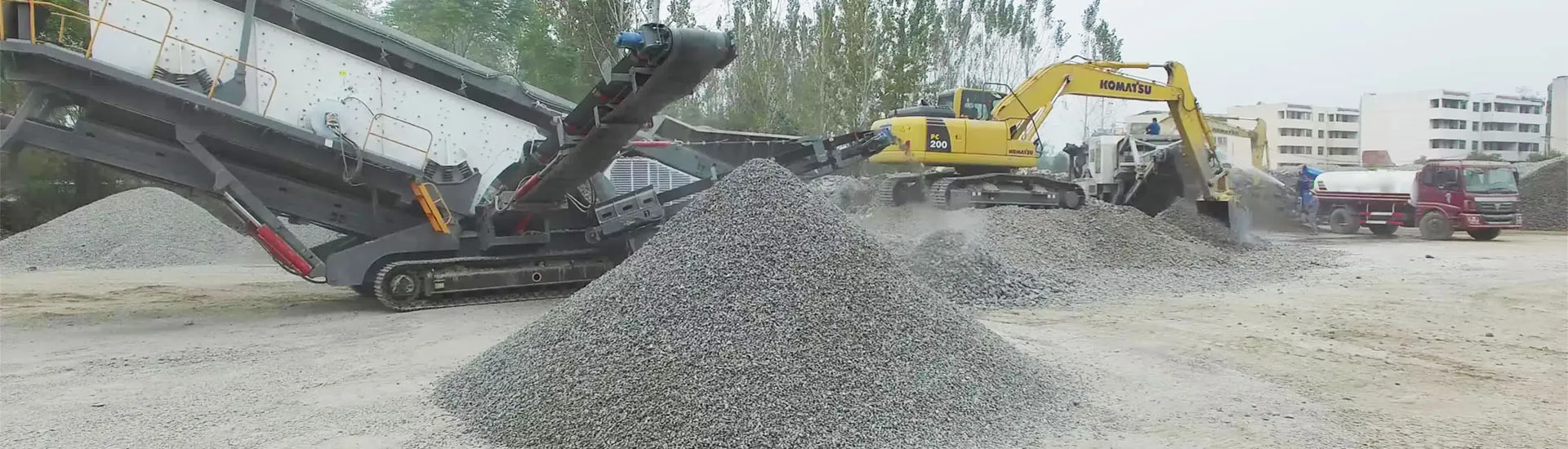
Understand in One Article: The Working Principle of the Double-Roll Crusher
The double-roll crusher, as the name suggests, has two rolls that rotate towards each other as its core working components. Its operating logic is quite simple: the motor drives the two rolls to rotate in opposite directions through a reducer. When materials enter the crushing chamber between the two rolls from the feed port, they are crushed to the required size under the pressing and shearing action of the rolls and finally discharged from the outlet below the rolls.
It is worth noting that to meet the crushing needs of different materials, the gap between the rolls of a double-roll crusher can be flexibly adjusted. By adjusting the gap size, the discharge particle size can be precisely controlled, which is key to meeting the particle size requirements of different operating scenarios. Additionally, some high-end models are equipped with an overload protection device. When hard objects that cannot be crushed, such as iron blocks, enter the crushing chamber, the equipment will automatically stop or allow the rolls to retreat, preventing damage to core components and greatly enhancing the operational safety of the equipment.
Core Advantages: Why Choose a Double-Roll Crusher?
In medium and fine crushing operations, the advantages of the double-roll crusher are very prominent, which is also the core reason for its wide application. Specifically, it can be summarized in the following four points:
1. The particle size is uniform, and the product quality is high.
Since the material is crushed under the extrusion action of two rollers, the granularity of the crushed material is uniform, with minimal over-crushing. For operations that require precise control of particle size (such as gypsum crushing in the construction materials industry or ore crushing in the mining industry), a roll crusher can directly produce finished products that meet the requirements, without the need for additional screening steps, thereby reducing subsequent operational costs.
2. Simple structure, low maintenance costs
Compared to equipment like jaw crushers and cone crushers, the double roller crusher has fewer core components and a more compact structure. During daily maintenance, it only requires regular checks of roller wear and lubrication of the bearings, making the maintenance process simple and placing low technical demands on operators. Additionally, the rollers are made of wear-resistant materials, making them easy to replace and long-lasting, further reducing the equipment's operation and maintenance costs.
3. Low energy consumption, energy-saving and environmentally friendly
The double-roll crusher uses a crushing method of compression. Compared to impact crushing, it requires less crushing force and therefore consumes less energy. According to statistics, under the same production capacity, the energy consumption of a double-roll crusher is about 30% lower than that of traditional crushing equipment. In addition, the equipment operates with low noise and produces minimal dust emissions, meeting current environmental production requirements, making it suitable for use in areas near urban regions or factories with strict environmental regulations.
4. Wide range of applicable materials, strong compatibility
The double-roll crusher can handle various materials with a compressive strength of ≤160MPa, including coal, limestone, gypsum, shale, quartz sand, construction waste, and more. It can reliably crush both brittle materials and materials with low stickiness. Additionally, different types of rolls can be selected according to operational needs (such as smooth rolls and toothed rolls) — smooth rolls are suitable for brittle materials, while toothed rolls are suitable for materials with higher stickiness or hardness, offering strong adaptability.
Application scenarios: These fields cannot do without roll crushers
With the above advantages, roller crushers have been widely used in crushing operations across multiple industries, with core application scenarios including:
1. Mining Industry
In the mining operations of coal, iron, copper, and other minerals, roller crushers are mainly used for medium and fine crushing. For example, they crush large mined ores into sizes suitable for flotation or screening, improving the efficiency of subsequent ore processing operations. Due to their low energy consumption and stable operation, they are especially suitable for the large-scale operations of small and medium-sized mines.
2. Building materials processing industry
In the production of building materials such as cement, gypsum board, and tiles, roll crushers are used to process raw materials like limestone, gypsum, and clay. Taking gypsum crushing as an example, a roll crusher can crush block gypsum into uniform fine powder, which can be directly used in the production of gypsum boards, ensuring the stability of the building material product quality.
3. Construction waste recycling sector
With the advancement of policies for the resource utilization of construction waste, the double-roll crusher has become one of the key pieces of equipment for construction waste processing. It can crush discarded concrete, bricks, and other construction waste into recycled aggregates of different sizes, which are used to make products such as recycled concrete and permeable bricks. Its compact structure and ease of mobility also make it suitable for on-site mobile operations at construction waste processing sites.
4. Chemical and Metallurgical Industry
In the chemical industry, double-roll crushers are used to process fertilizer raw materials, chemical waste residue, and other materials; in the metallurgical industry, they are used to process metallurgical slag, iron ore concentrates, and more. Because their crushing process is gentle and does not alter the chemical properties of the materials, they can meet the strict requirements for material purity and particle size in the chemical and metallurgical industries.
Selection Tips: How to Choose the Right Double-Roll Crusher for Yourself
Choosing the right equipment can improve operational efficiency and avoid resource waste. When selecting a double-roll crusher, you can consider the following four dimensions:
1. Select model based on material characteristics
First, clarify the characteristics of the material to be crushed: If the material has low hardness (such as gypsum or coal), a smooth roller crusher can be chosen; if the material is harder or more adhesive (such as shale or construction waste), it is recommended to choose a toothed roller crusher to improve crushing efficiency; if the material contains a lot of impurities (such as iron blocks), a model equipped with an overload protection device should be selected to prevent equipment damage.
2. Select model based on production capacity requirements
The capacity of double-roll crushers varies greatly across different models, ranging from a few tons per hour to several hundred tons per hour. When selecting a model, it is important to consider the scale of your operation to determine the required capacity. For example, for gypsum crushing in a small building materials factory, a small double-roll crusher with a capacity of 10-50 tons per hour is sufficient; for large-scale operations in a big mine, a large model with a capacity of over 100 tons per hour is needed.
3. Focus on the quality of core components
The quality of core components directly determines the service life and operational stability of the equipment. When selecting components, special attention should be paid to the rollers and bearings: the rollers should be made of wear-resistant materials (such as high manganese steel or alloy materials) to ensure longevity; the bearings should have good sealing performance and lubrication to prevent failures caused by dust ingress or insufficient lubrication.
4. Choose a reliable manufacturer
Choose manufacturers that provide integrated services of research and development, production, and after-sales support. This not only ensures the quality of the equipment but also provides comprehensive after-sales service. For example, manufacturers can offer customized equipment solutions based on the user's specific operating scenarios, and in case of equipment failure, they can provide timely repair services to minimize downtime.
Summary: The Core Value and Future Trends of Roll Crushers
The double-roll crusher has become a core piece of equipment for medium and fine crushing operations due to its advantages of uniform particle size, low energy consumption, simple maintenance, and strong adaptability. It is widely used in industries such as mining, building materials, and construction waste recycling. With the tightening of environmental regulations and the development of intelligent technologies, the future of double-roll crushers is expected to move towards intelligence, energy efficiency, and larger scale—for example, incorporating intelligent monitoring systems to monitor equipment operation in real time, and optimizing roller structures to further improve crushing efficiency and energy utilization.
If you are looking for a double-roll crusher suitable for your operating conditions, you might consider the selection tips provided in this article: clearly identify the characteristics of your materials and production capacity requirements, and choose a reliable manufacturer and the appropriate model. If you have any other questions about double-roll crushers, feel free to leave a comment and join the discussion!